
Smooth, Reliable Engine Balancing for Every Rebuild
Franklin Engineering Services provides specialist engine balancing for heavy diesel engines. Crankshaft, flywheel and full rotating assembly balancing carried out in-house on dedicated balancing equipment, as a standalone service or as part of a complete engine recondition.

Eliminating Vibration for Long-Term Reliability

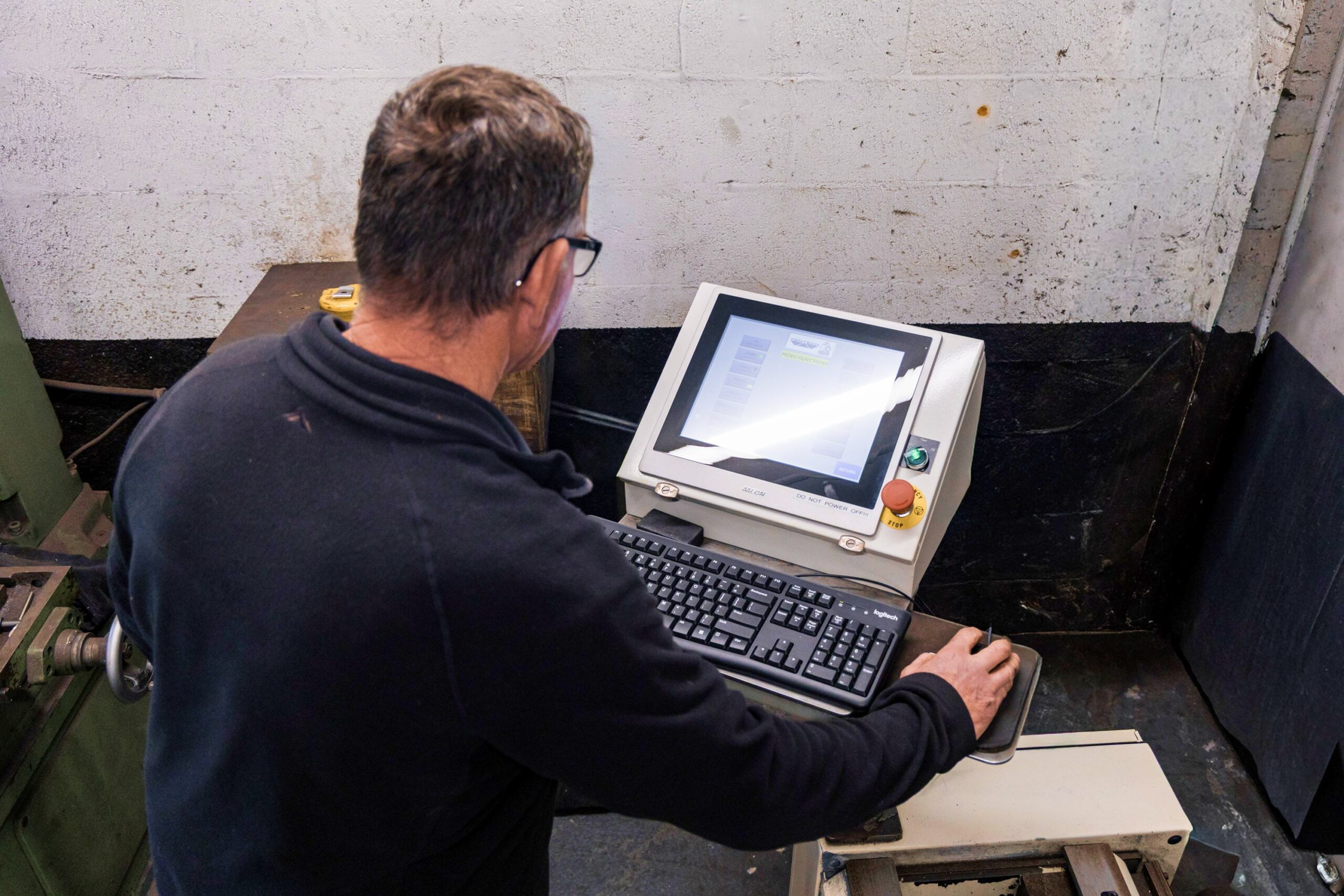
Engine balancing is the process of ensuring that the rotating components of an engine — the crankshaft, connecting rods, pistons, flywheel and associated assembly — are precisely matched in weight and mass distribution so that the engine runs smoothly at all operating speeds. An unbalanced rotating assembly generates vibration. In a heavy diesel engine running under sustained load, that vibration causes bearing wear, fatigue cracking, and accelerated deterioration of engine components; problems that compound quietly over time until something fails.
Balancing is not only for high-performance or race engines. Any diesel engine that has been reconditioned with new pistons, connecting rods or a reground crankshaft benefits from having the rotating assembly rebalanced. New components — even those from the same production batch — vary slightly in weight. Those small differences, multiplied by the rotational forces inside a running engine, become meaningful. Getting the assembly balanced properly as part of a rebuild is a straightforward step that has a lasting impact on how the engine runs and how long it lasts.
Franklin Engineering Services carries out engine balancing in-house on dedicated balancing equipment, as part of the workshop's broader reconditioning capability. The service is available as a standalone job — for customers who need specific components balanced — or as an integrated stage within a full engine rebuild. Either way, the work is done by a team that understands how balancing fits into the broader picture of what makes a reconditioned engine reliable.
Rotating Assembly Balancing for Heavy Diesel Engines and Equipment
Franklin Engineering Services balances individual components and complete rotating assemblies across the full range of heavy diesel engine platforms. The service covers everything from crankshaft-only jobs through to full rotating assembly matching — wherever precision balance is needed to support a quality rebuild or resolve a vibration problem.
COMMON APPLICATIONS:
- Crankshaft static and dynamic balancing
- Flywheel balancing
- Full rotating assembly balancing — crankshaft, connecting rods, pistons, and flywheel
- Harmonic damper / vibration damper inspection and assessment
- Balancing as part of a complete engine reconditioning rebuild
- Standalone balancing for customer-supplied components
INDUSTRIES SERVED:
- Heavy Transport & Haulage
- Earthmoving & Civil
- Marine & Ferry Operations
- Agricultural & Farming
- Generators & Industrial
Dedicated Balancing Equipment In-House, Integrated with Reconditioning
Engine balancing requires dedicated equipment: dynamic balancing machine that can spin components at speed, measure mass distribution precisely, and identify where material needs to be added or removed to bring the component into balance. Most general repair workshops do not have this equipment, which means balancing typically gets sent out to a specialist, adding time and cost to a rebuild. Franklin Engineering Services has balancing capability in-house, which means the work can be scheduled and managed as part of a single reconditioning job rather than as a separate subcontract step.
The practical advantage for customers is straightforward: a crankshaft that has been reground at Franklin Engineering Services can be balanced at Franklin Engineering Services, and an engine being fully reconditioned at Franklin Engineering Services can have its complete rotating assembly balanced as part of that rebuild — without the component leaving the workshop. That continuity matters for quality and accountability. The team carrying out the balance work understands what the engine is going into, what the operational requirements are, and what standard the finished assembly needs to meet.
What Franklin Engineering Services can balance:
Crankshaft balancing
Static and dynamic balancing of crankshafts following grinding or as a standalone service, measured to the tolerances required for the engine platform.
Flywheel balancing
Flywheels balanced individually and as part of a matched assembly, including ring gear assessment where relevant.
Full rotating assembly
Crankshaft, connecting rods, pistons and flywheel balanced as a matched set — the standard required for a properly engineered engine rebuild.
Standalone component balancing
Individual components balanced for customers carrying out their own rebuilds or requiring a specific component verified before reassembly.
Engine balancing is not an optional extra, it is part of what makes a quality rebuild last. Franklin Engineering Services has the equipment and experience to do it properly, in-house, as part of every recondition.

Talk to Us About Your Engine Balancing Requirements
Tell us the engine type, what components you need balanced, and whether this is part of a broader reconditioning job, and the Franklin Engineering team will come back to you with a clear picture of what's involved.
Frequently Asked Questions
What is engine balancing and why does it matter?
Engine balancing is the process of matching the weight and mass distribution of rotating components — crankshaft, connecting rods, pistons and flywheel — so the assembly spins smoothly at all engine speeds. An unbalanced rotating assembly generates vibration that causes bearing wear, fatigue in engine components, and shortened engine life. In heavy diesel engines running under sustained load, this matters: vibration that might be tolerable in a light vehicle becomes a significant reliability issue. Balancing is one of those steps that is easy to skip and costly to regret.
Does every reconditioned engine need to be balanced?
Any engine that has been rebuilt with new pistons, new connecting rods or a reground crankshaft should be balanced — because new components vary slightly in weight, and those variations affect how smoothly the rotating assembly runs. An engine that is simply reassembled with the original components back in their original positions may not need a full balance, but even then it is worth checking. FES can advise on what is appropriate for the specific job.
What is the difference between static and dynamic balancing?
Static balancing corrects a component's weight distribution when it is at rest — it ensures the component is evenly balanced around its axis. Dynamic balancing goes further, measuring and correcting balance at operating speed across multiple planes simultaneously. For crankshafts and rotating assemblies in running engines, dynamic balancing is the correct standard — static balancing alone is not sufficient. FES carries out dynamic balancing on dedicated equipment.
Can I send individual components for balancing, or does Franklin Engineering need the full assembly?
We can balance individual components — crankshafts or flywheels — as standalone jobs. For a complete rotating assembly balance, we will need the crankshaft, connecting rods, pistons and flywheel together, as the matching process requires all components to be weighed and adjusted as a set. If you're unsure what you need, describe the job and the Franklin Engineering team can advise.