
Tractor and Farm Machinery Engine Reconditioning
for New Zealand's Agricultural Sector
Farming runs to a tight seasonal calendar, and an engine failure during harvest, planting, or irrigation is not something you can easily schedule around. Franklin Engineering Services provides specialist diesel engine reconditioning, cylinder head work, and parts sourcing for tractors, harvesters, and agricultural machinery across New Zealand, with the in-house capability to keep older platforms running when parts are hard to find and a replacement is not the answer.

Farm Engines Work to a Calendar
and So Does the Workshop That Supports Them

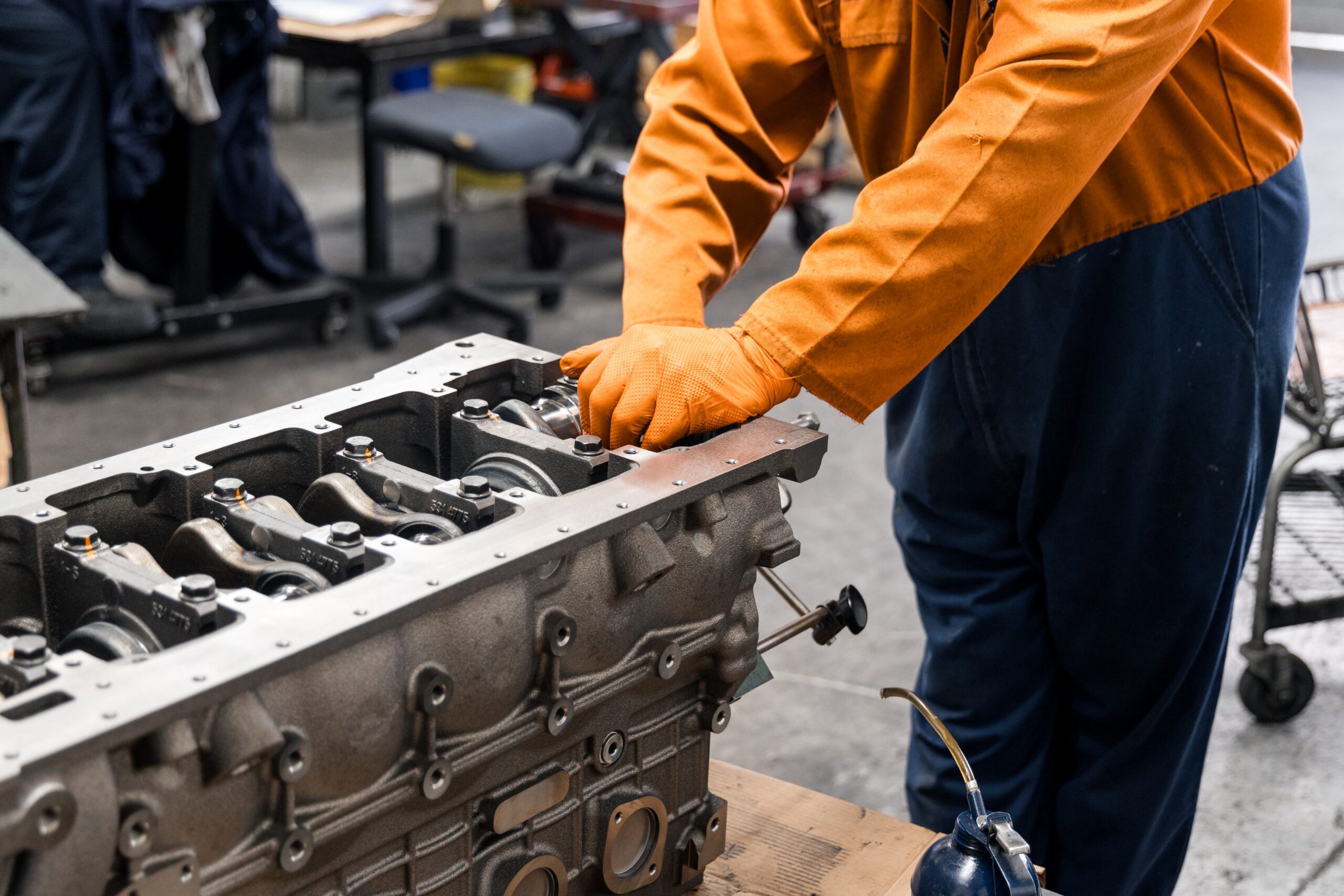
Agricultural diesel engines work differently to almost any other application. For much of the year they may sit relatively idle, then when harvest arrives or the irrigation season opens, they run hard. Day after day, at high load, often in conditions that test air filtration, cooling systems, and engine internals: fine dust, chopped crop residue, heat, and the sustained effort of machinery working at or near capacity for weeks at a time. The wear pattern that creates is not the same as a truck that covers kilometres consistently all year. It is concentrated, intense, and arrives at the worst possible time.
The agricultural engine platforms Franklin Engineering Services supports cover the major brands New Zealand farmers rely on: John Deere PowerTech and PowerTech Plus series in tractors and harvesters; Case IH and New Holland (FPT) units; AGCO Power engines across Fendt and Massey Ferguson machinery; Deutz air-cooled and liquid-cooled platforms. Many of these engines remain in service for decades. A well-maintained John Deere 6068 or a Case IH 6T.830 is a long-term asset, and when the time comes for a recondition, the goal is to restore it to a condition that will deliver another decade of reliable seasonal performance, not a rebuild that gets through one more harvest.
Parts availability is one of the real constraints in agricultural engine work. Older tractor and harvester platforms often carry components that are no longer stocked locally — pistons, liners, bearings and gasket sets that require sourcing through specialist channels or, in some cases, engineering solutions where an off-the-shelf part simply does not exist. Franklin Engineering Services has the supplier relationships and the machining capability to work around the parts problem, which is often what keeps an older agricultural engine running rather than being sidelined by a component no local distributor can supply.
Common Engine Issues in Agricultural and Farming Applications
The engine work that comes to Franklin Engineering Services from agricultural operators tends to follow a familiar pattern: seasonal wear, contamination damage, cooling system stress, and the parts challenge that comes with older machinery that is still worth rebuilding but increasingly difficult to support through standard channels.
Seasonal wear concentrated into intensive operating periods
Agricultural engines that run at high load through planting, harvest, and irrigation seasons accumulate wear differently to year-round equipment. A four-month intensive season followed by extended low-use periods creates specific fatigue and wear patterns that compound over time.
Dust and crop residue contamination accelerating internal wear
Harvesting environments are among the most demanding for air filtration and engine internals. Fine grain dust, chopped crop material, and airborne chaff load air filters rapidly and, when maintenance intervals are stretched during a busy season, find their way into the engine.
Cooling system stress and cylinder head damage during peak loads
Tractors and harvesters working at sustained capacity in summer heat — pulling implements, running PTO equipment, harvesting continuously — place significant load on cooling systems, and cylinder heads are frequently the casualty when cooling is compromised or intervals are extended.
Hard-to-source parts for older tractor and harvester platforms
Agricultural operators keep machinery for 20 or 30 years, and the parts for a well-used John Deere or Case IH engine from the 1990s or early 2000s are not held in depth by local distributors, requiring sourcing expertise and, in some cases, machined solutions.
Harvest deadline pressure ruling out extended workshop time
An agricultural engine that fails during harvest cannot wait weeks for a workshop to fit it in. The timing of the repair matters almost as much as the quality, and operators need a workshop that understands the seasonal calendar and can work to it.
Irrigation pump and stationary engine requirements
Diesel engines driving irrigation pump sets and stationary equipment accumulate hours quickly through the irrigation season and require the same level of specialist reconditioning as tractor and harvester engines — but are often overlooked until a seasonal breakdown forces the issue.
Specialist Engine Support for New Zealand's Agricultural Operators
Whether it is a full engine recondition on a high-hour tractor, cylinder head work after an overheating event, sourcing parts for an older platform that no distributor stocks locally, or machining a solution for a component that simply cannot be ordered, Franklin Engineering Services has the in-house capability and the parts knowledge to support the full scope of agricultural engine work.
Engine Reconditioning
When a high-hour tractor or harvester engine reaches the end of its serviceable life, a thorough recondition restores it to reliable performance for another long cycle of seasonal work. Franklin Engineering Services reconditions the major agricultural engine platforms in-house — including John Deere PowerTech, Case IH, New Holland FPT, AGCO Power and Deutz units — with all machining, parts sourcing and assembly carried out at the Pukekohe workshop.
Crankshaft Grinding
High-hour agricultural engines that have run through multiple intensive seasons frequently show crankshaft journal wear that needs to be addressed as part of a quality rebuild. FES grinds main and big-end journals to precise undersize tolerances in-house — a step that some workshops skip or send out, but that Franklin Engineering Services handles at the Pukekohe workshop as part of a complete recondition.
Diesel Engine Parts
Sourcing the right pistons, liners, bearings, gasket sets and wear components for older agricultural engine platforms is often the hardest part of getting a rebuild completed. Franklin Engineering Services has the supplier relationships to find parts that local distributors no longer stock — and where a standard part cannot be sourced, the machining capability to work around it. For operators with older machinery worth keeping running, the parts problem is solvable.
Cylinder Head Remanufacturing
Cooling system stress and extended service intervals during busy seasons are common causes of cylinder head failure in agricultural engines. Franklin Engineering Services pressure tests, crack detects, machines and fully remanufactures cylinder heads for the major tractor and harvester engine platforms — restoring proper combustion sealing so the engine goes back to work, not back to the workshop.
General Machining Services
Older agricultural machinery sometimes needs an engineered solution rather than a catalogue part — a component machined to fit an older platform, a worn housing brought back to specification, or a custom part that never existed off the shelf. Franklin Engineering Services’ general machining capability covers the non-standard work that keeps older, valuable agricultural machinery in service when the standard options run out.
Franklin Engineering Services reconditions agricultural diesel engines for farming operations across New Zealand. Tractors and harvesters that have worked through decades of seasons and are worth keeping running, rebuilt in-house with the parts, equipment and experience to do it properly.

Talk to Us About Your Agricultural Engine Requirements
Whether it is a scheduled winter recondition, a harvest-season breakdown, a cylinder head that needs work, or a part you cannot find through the usual channels, tell us the tractor or machinery make and model, the engine, and what you are dealing with. The Franklin Engineering Services team will come back with a clear assessment and a realistic timeframe.