
Diesel Generator Engine Reconditioning When It Matters
A generator that fails when the power goes out has done the one thing it exists to prevent. Franklin Engineering Services provides specialist diesel engine reconditioning, cylinder head work and parts sourcing for standby, prime power and continuous-duty generator sets, coupled with the in-house capability to rebuild the engines that critical and commercial operations depend on.

Generator Engines Have One Job
and It Has to Work Every Time

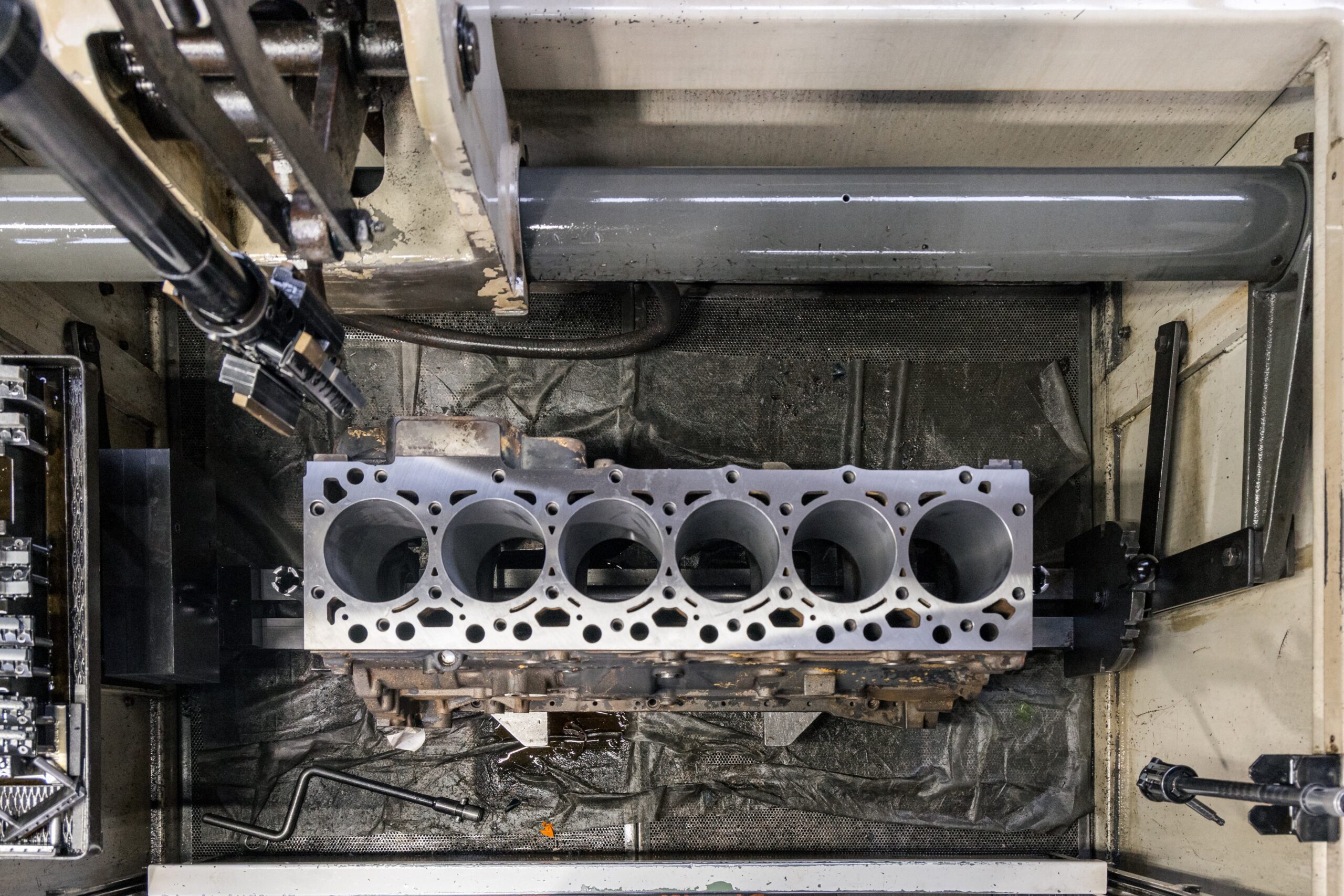
Diesel generator engines occupy a unique position in the world of engine maintenance. Unlike a truck or a tractor — where hours accumulate steadily and wear is predictable — a standby generator might sit largely unused for months, then be expected to deliver full load output the moment mains power fails. For hospitals, data centres, telecoms infrastructure, water treatment facilities and commercial buildings, that moment is not a test; it is the reason the generator exists. An engine that has not been properly maintained, or that has accumulated internal damage from extended low-load running, will not perform reliably when the demand is real.
The engine platforms behind New Zealand's generator fleet cover a wide range of ages and applications. Cummins NT855, KTA19 and QSX15 units in larger standby and prime power sets. Perkins 4.248, 1006 and 2000-series engines in light and medium commercial gensets. Caterpillar 3306, 3406 and C-series engines in industrial and continuous-duty applications. John Deere PowerTech units in medium generator sets. Many of these engines have been in service for 20 or 30 years — and the maintenance history behind them is not always what it should be. A genset acquired second-hand, inherited with a building purchase, or simply overlooked during years of reliable standby service may be carrying wear, contamination or internal damage that is invisible until the moment of demand.
The duty cycle of generator engines creates specific failure modes that most vehicle-focused diesel workshops do not encounter. Wet stacking — the accumulation of unburned fuel in the exhaust and cylinder walls from extended low-load or no-load running — is one of the most common causes of deteriorating generator engine performance. Glazed cylinder bores, fouled injectors, degraded valve seating and coolant contamination from extended service intervals all follow a pattern that Franklin Engineering Services recognises and can properly address, whether the requirement is a full engine recondition, cylinder head work, or a targeted repair that gets the set back to a reliable, test-ready condition.
Common Engine Issues in Generator and Genset Applications
Generator engine problems tend to follow patterns that are distinct from other diesel applications: the low-load duty cycle, long standby periods, and often incomplete maintenance histories create a specific set of failure modes that require a workshop with direct experience of genset engine work.
Wet stacking from low-load or no-load standby operation
Generators that run regular test cycles at low load — or that are rarely exercised at all — accumulate unburned fuel in the exhaust system and on cylinder walls, progressively degrading performance and masking the engine's true condition until a full-load demand exposes the problem.
Glazed cylinder bores reducing compression and oil control
Extended low-load running causes cylinder bore glazing — a polished, non-porous surface that prevents piston rings from seating correctly, leading to oil consumption, compression loss and reduced power output that worsens progressively and cannot be resolved by running the engine harder.
Unknown or incomplete maintenance history on older generator sets
Standby generators installed with buildings, inherited through business changes or acquired second-hand often carry maintenance gaps that are not visible until the engine is stripped — wear, contamination and deferred service items that must be properly assessed before a reliable recondition can be carried out.
Hard-to-source parts for older genset engine platforms
Cummins NT855, Perkins 4.248 and 6.354, early Caterpillar 3300-series and similar legacy generator engine platforms require parts that are no longer held in depth locally — sourcing them requires specialist supplier relationships and, in some cases, machined solutions.
Cylinder head damage from coolant contamination or deferred service
Generator engines that have run with degraded coolant, extended service intervals or low coolant levels carry head gasket and cylinder head damage that must be addressed as part of any quality rebuild — and that a basic service will not identify until the engine fails.
Reliability requirements that leave no margin for a substandard rebuild
A generator that exists to protect critical systems — hospital operating theatres, data centre UPS backup, emergency services infrastructure — cannot tolerate a rebuild carried out to a lower standard than the application demands; the consequences of a failure at the wrong moment are too significant.
Specialist Engine Support for Generator and Genset Operators
Whether it is a full engine recondition on a high-hour or wet-stacked generator set, cylinder head work following coolant damage, sourcing parts for a legacy genset platform, or machining a solution where standard parts cannot be found — Franklin Engineering Services has the in-house capability to carry out the work properly and return the generator to a condition it can be relied upon.
Engine Reconditioning
A complete engine recondition is the right answer for a generator set that has accumulated wear, wet stacking damage, or an incomplete maintenance history that makes its actual condition unknown. Franklin Engineering Services reconditions the major genset engine platforms in-house — including Cummins NT855, KTA and QSX series, Perkins 1000 and 2000 series, Caterpillar 3300 and C-series, and John Deere PowerTech units — stripping, inspecting, machining and rebuilding to manufacturer tolerances so the engine can be trusted when the demand is real.
Cylinder Head Remanufacturing
Coolant contamination, degraded head gaskets and extended service intervals are common causes of cylinder head failure in generator engines — often discovered only when the engine is stripped for a recondition or fails unexpectedly under load. Franklin Engineering Services pressure tests, crack detects, machines and fully remanufactures cylinder heads for the major genset engine platforms, restoring proper combustion sealing and reliable performance.
Diesel Engine Parts
Legacy generator engine platforms — Perkins 4.248, 6.354, Cummins NT855, early Caterpillar 3300-series — require pistons, liners, bearings and gasket sets that are no longer stocked in depth locally. Franklin Engineering Services has the supplier relationships to source parts for older and less common genset engine platforms, and the machining capability to work around the gaps when a standard part simply cannot be found.
Crankshaft Grinding
High-hour generator engines, particularly those that have run extended oil change intervals or experienced contamination, carry crankshaft journal wear that must be properly addressed as part of a quality rebuild. Franklin Engineering Services grinds main and big-end journals to precise undersize tolerances in-house — an essential step in a recondition that will hold up under the sustained demands of prime power or critical standby operation.
General Machining Services
Older genset platforms sometimes need an engineered solution rather than an ordered part — a component machined to specification, a worn housing restored, or a custom part for a legacy engine where no catalogue equivalent exists. Franklin Engineering Services’ general machining capability covers the non-standard work that keeps older, valuable generator sets in service and compliant with the reliability requirements of the facilities they protect.
Franklin Engineering Services reconditions diesel generator engines for commercial, industrial and critical facilities across New Zealand. Standby sets and prime power units that have to perform when called upon, rebuilt in-house to the standard the application demands.

Talk to Us About Your Generator Engine Requirements
Whether it is a scheduled recondition on a high-hour set, a generator that failed its last load test, a cylinder head issue, or a legacy engine platform you cannot get parts for, tell us the genset make and model, the engine, and what you are dealing with. The Franklin Engineering Services team will come back with a clear assessment and a realistic scope.